The Load-In · https://theloadin.counterpress.media/features/daigo-umehara-nursing-home-never-retire-139686
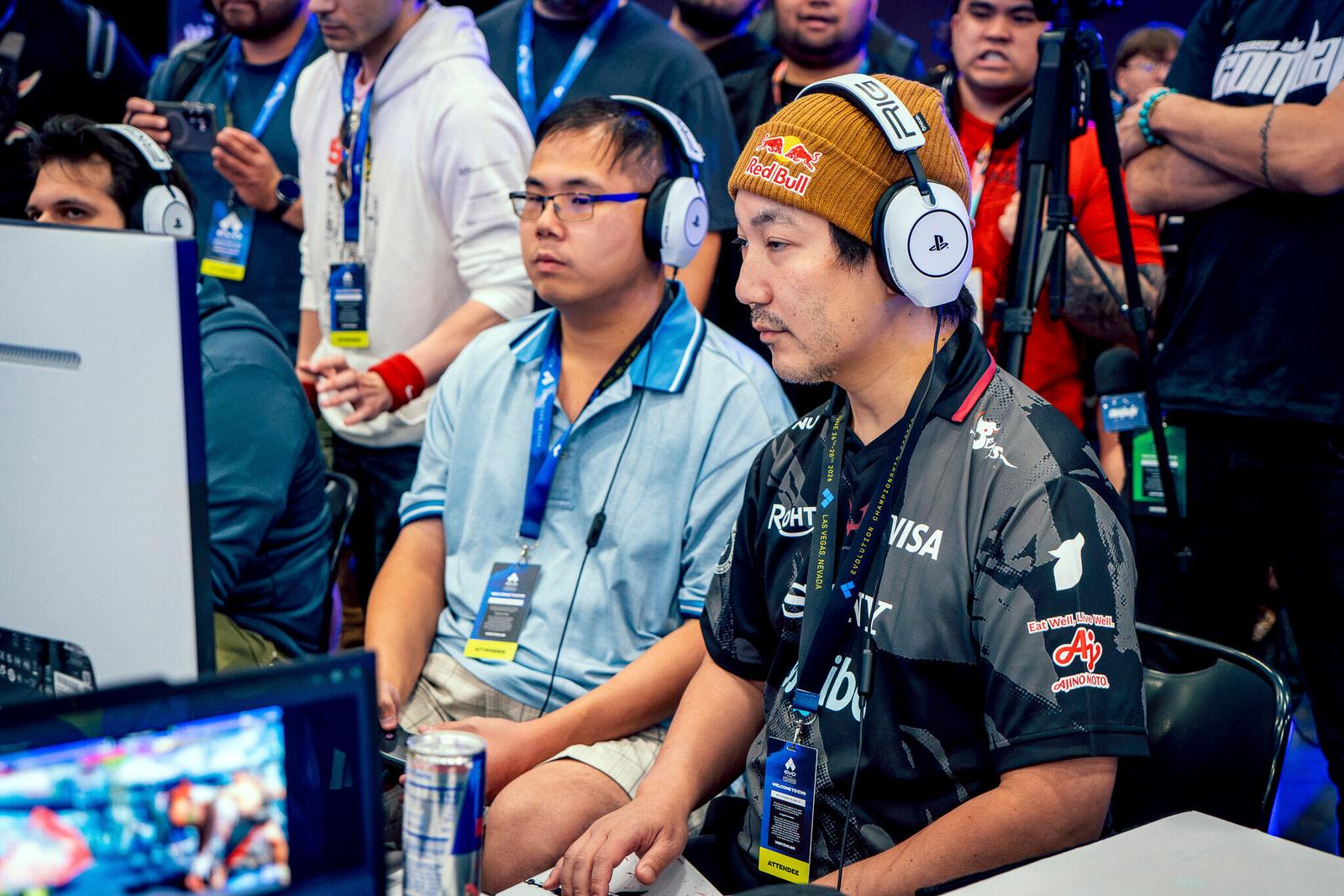

What A Nursing Home Taught Daigo Umehara About Never Quitting
06.02.26, 00:00 Updated 19.09.26, 07:54 5 Minute Read
Most of this article originally appeared in the Inside Esports newsletter on Feb. 6, 2026.
Daigo Umehara has made a legacy over his fighting game career.
The biggest thing, however, is his ability to adapt to the times after taking a break in 2004.
So how did 2004 revitalize a legend that has extended his career well into the mid-2020s?
The 2004 Break: When Fighting Games Didn't Pay
Much of Daigo's legacy is tied to EVO Moment 37 – the unforgettable moment when Daigo strung together frame-perfect parries to stay alive and pull off a victory against Justin Wong in 2004.
Daigo admitted he didn't think that moment would carry that much weight. Sure, the reaction was massive, but he didn't expect it to be enshrined as a defining moment in fighting game culture.
But as big as EVO Moment 37 is to fans, and how often it's brought up, EVO 2004 served as a more significant turning point in Daigo's life.
"2004 EVO was the tournament that made me decide to quit taking fighting games seriously," Daigo said.
Professional gaming wasn't the viable profession it would become.
"The real world demanded I do something else," Daigo said. "It wasn't because I was bored with the game or anything like that. I had to change my actions to match the reality of the world, so I had no choice but to quit."
Daigo competed less in the coming years, spending time working in a place that changed his perspective on everything.
The Nursing Home That Changed Everything
During this break, Daigo worked in a nursing home. There, he witnessed people from all walks of life at the end of their lives — former receptionists who worked in Ginza, former company presidents. This experience confronted him with the reality of mortality.
"You couldn't see any trace of that former life. Everyone had their past. They were all energetic once. They all lived hard," Daigo said. "But in the end, this is how it turns out, and, of course, I'll end up the same way."
Seeing this firsthand, Daigo started to view dying as a process rather than a single moment.
"Everyone knows that we're born and we die, but actually feeling that reality, really understanding it, is quite difficult," Daigo said. "Dying isn't just the moment when your life completely ends. Things you can do decrease little by little. Your ability to think diminishes. Your memories fade. It doesn't end suddenly. It ends gradually, bit by bit."
Return of the Beast
Daigo made his return to competing regularly in 2009 with a different perspective and a renewed passion for competition, which happened to coincide with the release of Street Fighter IV. It also didn't hurt that being a professional player had become more viable.
"That dormant passion just ignited all at once," Daigo said.
Daigo won the first Street Fighter IV tournament at EVO 2009 before repeating in 2010. In six Street Fighter IV EVO tournaments, he finished in the top 12 five times — only failing to get out of pool play once (2014). Over the course of Street Fighter IV's tournament life cycle, Daigo took home 13 Tier 1 titles and six Tier 2 titles.
Street Fighter V's release in 2016 ushered in a new era for Daigo.
Early in the game's life cycle, Daigo played Ryu. He performed well, earning four titles (one Tier 1 and three Tier 2).
He switched to Guile in 2017, but results were harder to come by. This prompted Daigo to switch from a traditional arcade stick to a Hitbox — a brand of leverless controller.
"It was going to be tough to win with that version of Guile," Daigo said. "So when I was struggling with what to do, I thought: maybe if I change my device and become capable of higher-level play, I might be able to overcome the gap in character performance through the device."
Daigo managed to earn his highest placement at an EVO event with a third-place finish at EVO Japan 2018. He ended the Street Fighter V era with strong finishes, ultimately claiming 11 titles (three Tier 1 and eight Tier 2).
Experiencing the Decline
Since Street Fighter 6's launch, Daigo hasn't had a single first-place finish as an individual. His best finish was second at a Tier 3 event in 2024. He's won five team tournaments, with the most recent being the Street Fighter League Pro-JP 2025 in January.
But even then, Daigo doesn't want people to view him as a legend coasting on past achievements.
"People might see my past achievements and accomplishments," Daigo said. "But that's the past, it's not who I am now. I don't really like riding on past success to do things. So if I completely lose that impulse or ability from within myself, anything could happen. I'm always thinking about that."
So naturally the question arose: Is Daigo, at 44, nearing the end of his career?
Unlike physical sports, fighting games test a different set of skills — reaction time and the stamina to last through multiple-hour tournament days. Even though Daigo remains in good shape, playing at a high level is still taxing.
"It's definitely something that's approaching, something I can feel," Daigo said. "There are definitely things where I think, 'I used to be able to notice that,' or 'I could have reacted to that,' or 'I would have remembered that.' Those moments exist. There are probably tons of things I don't even notice that I've lost."
While ability is one consideration for whether he stops competing regularly, Daigo also considers the will to compete as another variable – a timeline he doesn't think much about.
"If there comes a time when I completely lose that fighting spirit or ability, I haven't really thought about how I'd demonstrate my existence at that point," Daigo said. "Maybe it's OK if I can't demonstrate it."
Bridging Eras: Arcade Days vs. Online Gatherings
When Daigo started competing, arcades were the main gathering spot for competition. Put the quarter on the machine, wait your turn. Win and you keep playing. Lose? You lost the coin and your turn.
But for Daigo, the arcades were more than just the games. It was about the community.
"It wasn't just that they loved games. It was that they had no place at home," Daigo said. "Maybe they didn't get along with their parents. So, to put it extremely, it didn't even matter if people got good at games. As long as they could spend their time there after school or work, that was enough. That's what that era was like."
With traditional arcades closing – including spots in Akihabara, Tokyo's famed electric city – the majority of competitive play has moved online.
"It's completely reversed," Daigo said. "Back then, it was a gathering of people whose home environments made them not want to be there. That's a big difference."
Combined with bigger prize pools and streaming platforms, Daigo has witnessed the growth and evolution of the community.
"Gaming has changed into an era where if you're good, you get praised, you look cool, you can make money," Daigo said.
Daigo's first EVO was in 2003, which featured approximately 300 entrants for Street Fighter III: Third Strike. In 2025, Street Fighter 6 drew 4,233 entrants. Daigo placed in the top 48.
"It's amazing. Back then, it wasn't the era where FGC had this massive popularity and excitement like it does now," Daigo said. "The fact that EVO kept going during those early, quiet times and actually grew—that's what's really incredible. Now it's at a point where people attract more people, and it just keeps building."
“"It's amazing. Back then, it wasn't the era where FGC had this massive popularity and excitement as it does now. The fact that EVO kept going during those early, quiet times and actually grew that's what's really incredible. Now it's at a point where it attracts more people, and it just keeps building."”Daigo UmeharaStreet Fighter professional
Related Topics

Paul Delos Santos
Editoris a reporter based in Las Vegas. He covers the Vegas Golden Knights for NHL.com and covers esports and general Las Vegas sports for The Sporting Tribune. He’s a gamer who never has time to play them, so he naturally opted to write and talk about them instead.