The Load-In · https://theloadin.counterpress.media/features/arslan-ash-japan-tekken-invitational-gap-fatal-fury-139794
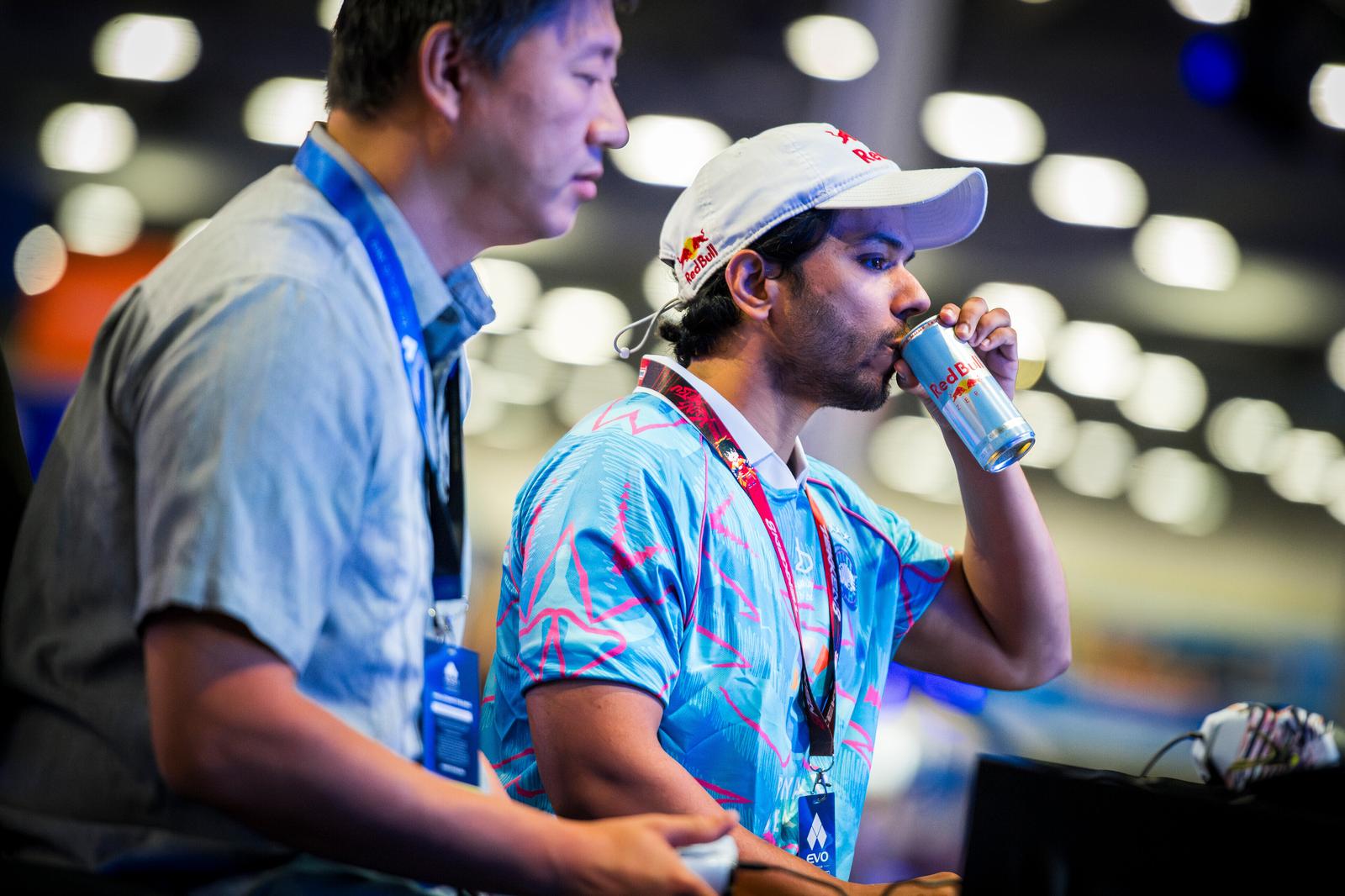

Why Arslan Ash Left Pakistan to Get Better at Tekken
03.03.26, 00:00 Updated 19.09.26, 01:26 7 Minute Read
This article appeared on the March 3 edition of the Inside Esports newsletter.
Arslan “Arslan Ash” Siddique is a player whose attention to detail runs so deep that he relocated to another country to find gaps in a game he’s seemingly already mastered.
We reviewed this during our sit-down earlier this year to discuss a variety of topics.
Why Japan?
Arslan officially announced his move and change of operations to Japan in February.
Multiple reasons drove the decision.
Arslan likes Japan, which made it an easy choice. Living there as a resident also simplifies the visa process for international travel. But beyond personal preference and logistics, the decision runs deeper. The competitive scenes for both Tekken and Fatal Fury: City of Wolves (more on this later) are simply stronger there.
In Pakistan, he said, players compete in community groups. Arslan’s group had seven people. Players have their circles and play within them. At some point, they’ve mapped their training partners’ tendencies, their characters, and their habits. While fundamental strength can be sharpened at this level, the problem surfaces when players leave the region for an EVO or Combo Breaker and find themselves lacking character knowledge — because those characters simply never came up back home.
Arslan pointed to Tekken 8 characters like Lili, Lee, and Xiaoyu as examples — characters that barely exist in Pakistan’s local scene. Sure, the frame data is available to study, but building a real game plan and a feel for those characters requires actually playing against them, and there hasn’t been a reason to until now.
“I knew their style all day,” he said, describing the limitation of playing the same pool of opponents for years. “You get used to it. You say, ‘OK, I know what you are going to do.’”
It wasn’t a complaint or a criticism of one of the strongest regions in the world that he helped build. Instead, it was an honest assessment of what he needed to improve. Japan fixes that.
The online is better, both in terms of connection quality and accessibility to queue into Korea as easily as Tokyo. Arslan will be facing different players and characters.
“I will be facing like 100-plus styles, so that's like massive change,” Arslan said. “That's actually going to help in changing my strategy, and they're going to make me mentally more prepared for tournaments."
As for his desire to play Fatal Fury, he made a promise to his team that he'd compete in the game this year and doing that from Pakistan was close to impossible, as the game hasn’t permeated the scene.
The move wasn't a reset. It was a calculated decision to get better.
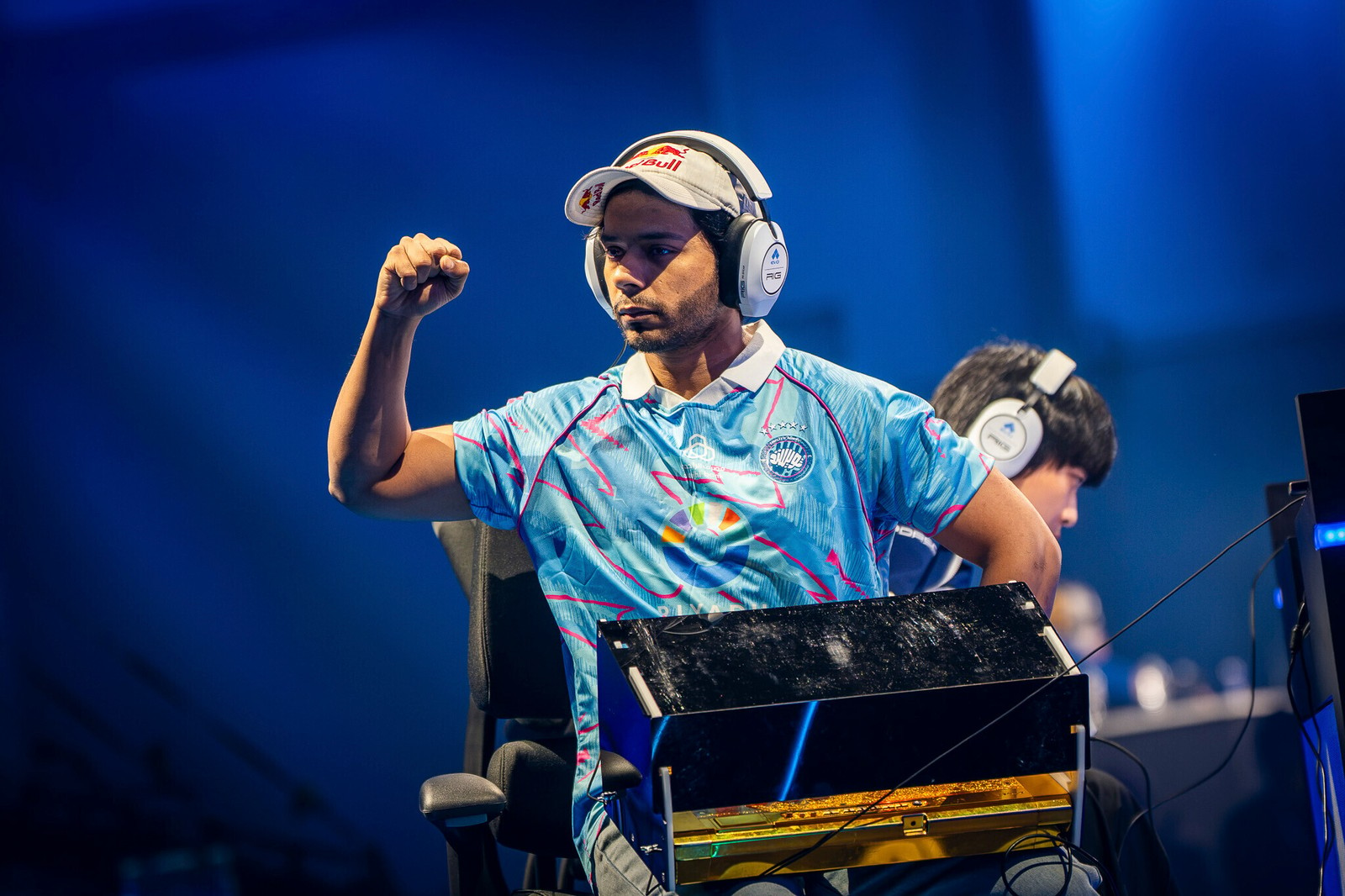

Invitationals Are Different. He Doesn't Know Why.
Arslan doesn’t pretend to have answers he hasn’t earned. And there’s a pattern that’s followed him since Tekken 8 launched that he’s still working to understand.
In open tournaments — events like EVO, Combo Breaker that feature brackets that allow anyone to play — he is consistently one of the best players in the world. You don’t win seven EVO titles without being proficient in those events.
But at events like the Tekken World Tour Finals and the Esports World Cup, the results haven’t matched the EVO wins.
“I also need to find out what the difference is,” he said.
Arslan has a theory, though. In invitational events, the field is smaller and preparation is targeted. Players have studied for matchup-specific outcomes, trying to find the small edges that mean the difference between winning and losing. The players know tendencies at a depth that an open-bracket opponent might not, as your opponent isn’t usually determined until another set of games take place.
“I feel like maybe people have trained so much versus me,” he said. “I think I just overthink it.”
That last part reflects the self-awareness required to compete at any high level. It’s not the format or the variance he’s pointing at — it’s his own mental state. He hasn’t cracked the solution yet, but his Tekken 7 TWT World Tour Finals win in 2023 is a reminder that when Arslan identifies a gap, he tends to close it.
Korea’s Soo-hoon “Ulsan” Lim has won both Esports World Cup Tekken 8 events, while Hyeon-ho “Rangchu” Jeong and Sun-woong “LowHigh” Yoon took home the first two Tekken 8 TWT Championships.
Arslan offers a partial explanation for why the gap might exist structurally. They run a tournament called STL (SOOP TEKKEN League) three times a year. The top Korean players compete against each other in a structured setting allowing them to stress-test their strategies. They’ve experienced something close to an invitational simulation. Pakistan doesn't have that, as the infrastructure or player depth aren't there. Korean players show up to closed brackets already sharpened against elite competition, and the results reflect it.
Arslan is partly trying to build that environment for himself. Playing top-level ranked and private sessions against Korean and Japanese players every day is the closest he’s come to replicating what Korea does collectively.
He's engineering his own version of the STL, one session at a time.
He’s honest that he hasn’t solved the riddle yet. “I still need to find the answer,” he said.
“I feel like maybe people have trained so much versus me. I think I just overthink it.”Arslan AshTekken Professional
SNK Has His Heart
Arslan hinted late in 2025 that he would begin playing SNK’s Fatal Fury: City of Wolves. So far, it’s been a humbling experience — and Arslan is fine with that.
He spent most of Fatal Fury: City of Wolves’s first season locked in on Tekken 8. That left him a step behind the Japanese community, which built a strong ecosystem and meta around the game. Despite their head start, Arslan is ready to learn and compete at a high level. He described himself as “kind of struggling” at the moment — which is probably temporary, given his track record in Tekken and his history with SNK games.
The core knowledge of fighting games transfers across titles, even across dimensions. Years of practice — understanding every character’s options, how systems interact, what risk-reward looks like at a fundamental level — doesn’t disappear when he loads into a different game.
The game-specific mechanics are new. The learning approach isn't.
Arslan also carries a specific love for SNK games that Tekken can’t quite match. In Tekken 8’s criticized Season 2, he sometimes found himself unsure what to lab after a loss — a dropped combo leading into a 50/50 interaction that ended the round could mean the problem was the combo, the 50/50 read, or the system itself.
In SNK games like King of Fighters and Fatal Fury, that ambiguity largely disappears.
“You always feel like, okay, this was my fault,” he said. “I could have done this. I could have done that.”
The feedback loop is clean and direct.
That’s the clarity he desires. While he would like to qualify for EWC and other high-level Fatal Fury events, he’s committed to Tekken and plans on competing in both in 2027, at the latest.
The jump into Fatal Fury: City of the Wolves is not a hobby.
It’s another thing to master.
No More 50/50s
Tekken 8 Season 3 is promising a “back to basics” marketing claim. What that actually means is up for debate, but at the end of the day, Arslan has one request.
“I just want to play Tekken. I just don’t want to play 50/50 all day,” he said.
He’s careful not to be overly optimistic. Season 2 made promises it didn’t keep, so the franchise has goodwill to earn back. But as a Tekken fan, he remains hopeful.
His technical critique of Season 2 echoes what other top professionals have said. He highlighted situations where getting punished didn’t end the opponent’s pressure — it just funneled into another forced guessing scenario.
“After every 10-frame punish, you have to face another 50/50,” he said. “Like, why?”
The current system is nearly zero-risk with counter-hit properties and tracking. You can spam it. That design philosophy broke something essential about Tekken's identity, and "back to basics" only means something if Bandai Namco is willing to actually fix it.
“Let’s see,” Arslan said. “If they don’t meet the expectations of the player, it will be really bad for the franchise.”
Conclusion
Arslan Ash is, by all accounts, already one of the best Tekken players in the world.
But being one of the best in the world, in any sport, comes with a particular kind of restlessness. The great ones don’t coast on what they’ve already figured out. They move toward the thing they haven’t.
He relocated to Japan for better competition. He’s grinding a new game from behind. He’s still working through why invitationals feel different — out loud, without pretending to have the answer.
When I caught up with him at the top of this conversation, he was still arranging his setup in Japan — camera in one corner, screen in another, figuring out where to look. That image has stayed with me. Even after seven EVO titles, Arslan Ash is still mid-setup. Still finding the gaps. That’s what separates the great ones from the unforgettable ones.
Related Topics

Paul Delos Santos
Editoris a reporter based in Las Vegas. He covers the Vegas Golden Knights for NHL.com and covers esports and general Las Vegas sports for The Sporting Tribune. He’s a gamer who never has time to play them, so he naturally opted to write and talk about them instead.